2020
Wall Painting & Mural
Museum of the Ramona Bowl Amphitheater, Hemet, California
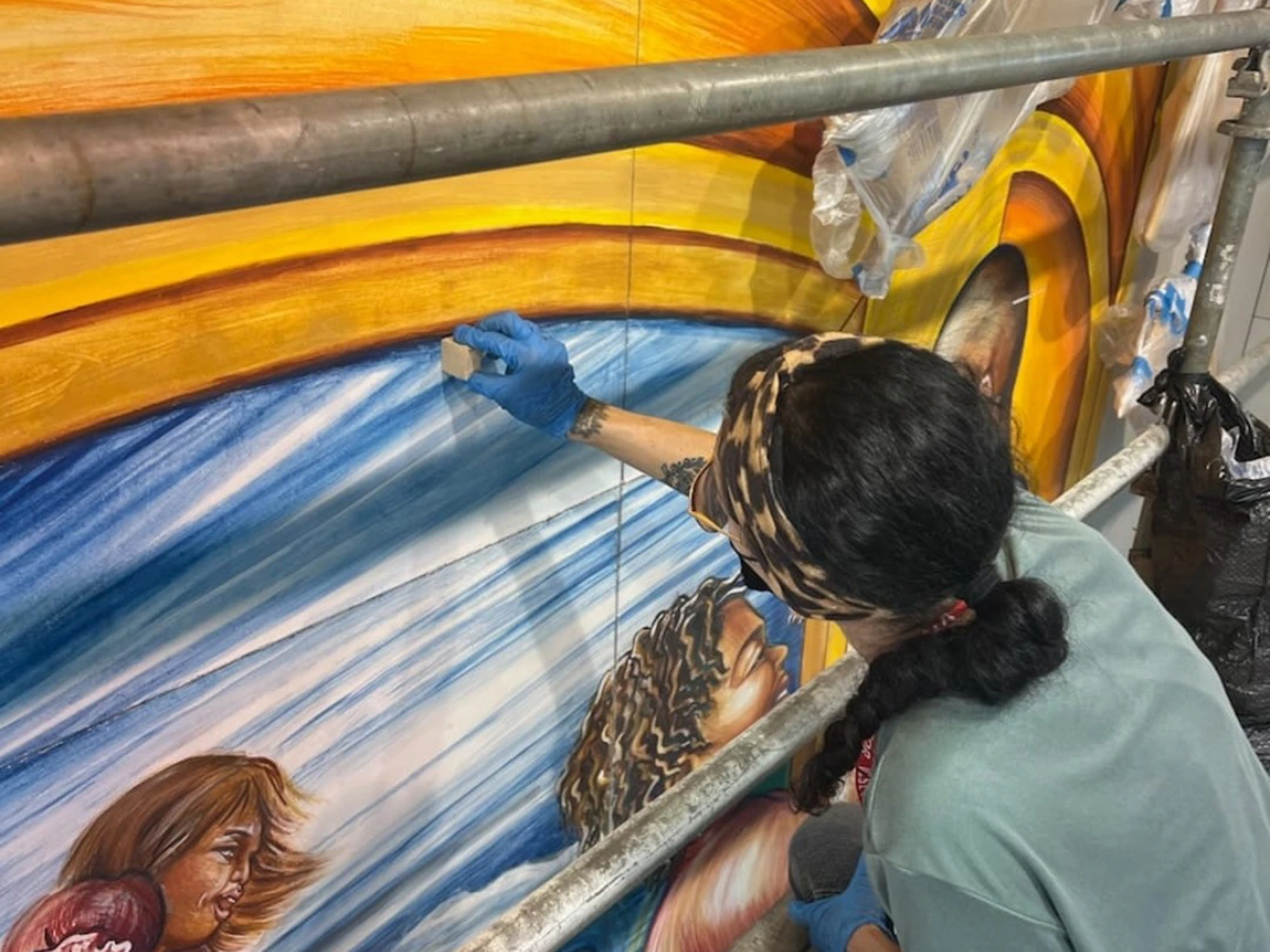
The project involved the conservation and restoration of the historic fresco located inside the museum of the Ramona Bowl Amphitheater in Hemet, California. The artwork was executed in 1942 using the “buon fresco” technique by artist Milford Zornes, assisted by his students from the Otis Art Institute in Los Angeles. The intervention became necessary due to severe degradation caused by water infiltration, accumulation of atmospheric grime, and, most notably, a past and improper application of white paint that covered extensive portions of the pictorial surface.
During the preliminary phases of the project, conservators conducted a thorough analysis of the wall to map structural and surface damage. The fresco exhibited thick deposits of dust, soot, and environmental pollutants accumulated over decades. However, the primary challenge was the layers of white paint previously applied over the original work. During cleaning tests, the removal of this paint revealed entire sections of the fresco that were hidden and long considered lost, including a highly detailed scene depicting Native Americans sitting around a bonfire.
The restoration intervention was carried out following rigorous methodological standards to guarantee material stability and maximum respect for the original artwork. The main activities included: